Key takeaways
- Program rules and contract clauses serve different purposes.
- Use current guidance alongside your actual contract.
- A policy update is not a substitute for an issued contract amendment.
The CMMC acquisition rule explains how CMMC requirements are used in defense contracting. It works alongside the program rule and applicable safeguarding clauses. For a contractor, the key question is what the solicitation or contract requires, for which systems, and by when.
This article was originally published during the 2025 acquisition-rule rollout. It has been updated to distinguish that history from the current program position.
How 32 CFR and 48 CFR fit together
The CMMC program rule in 32 CFR Part 170 establishes the framework for levels, assessment scope, status, and affirmation. The acquisition requirements in 48 CFR connect CMMC to solicitations and contracts.
These are related but different functions. A general description of a CMMC level does not tell you which clause has been included in a particular procurement or what amendments have been issued.
What changed after the original rollout?
The original acquisition implementation began in November 2025. The July 2026 Phase II suspension changed the planned next stage. The official implementation memo is the relevant source for the suspension and procurement instructions; earlier rollout charts should not be treated as current deadlines.
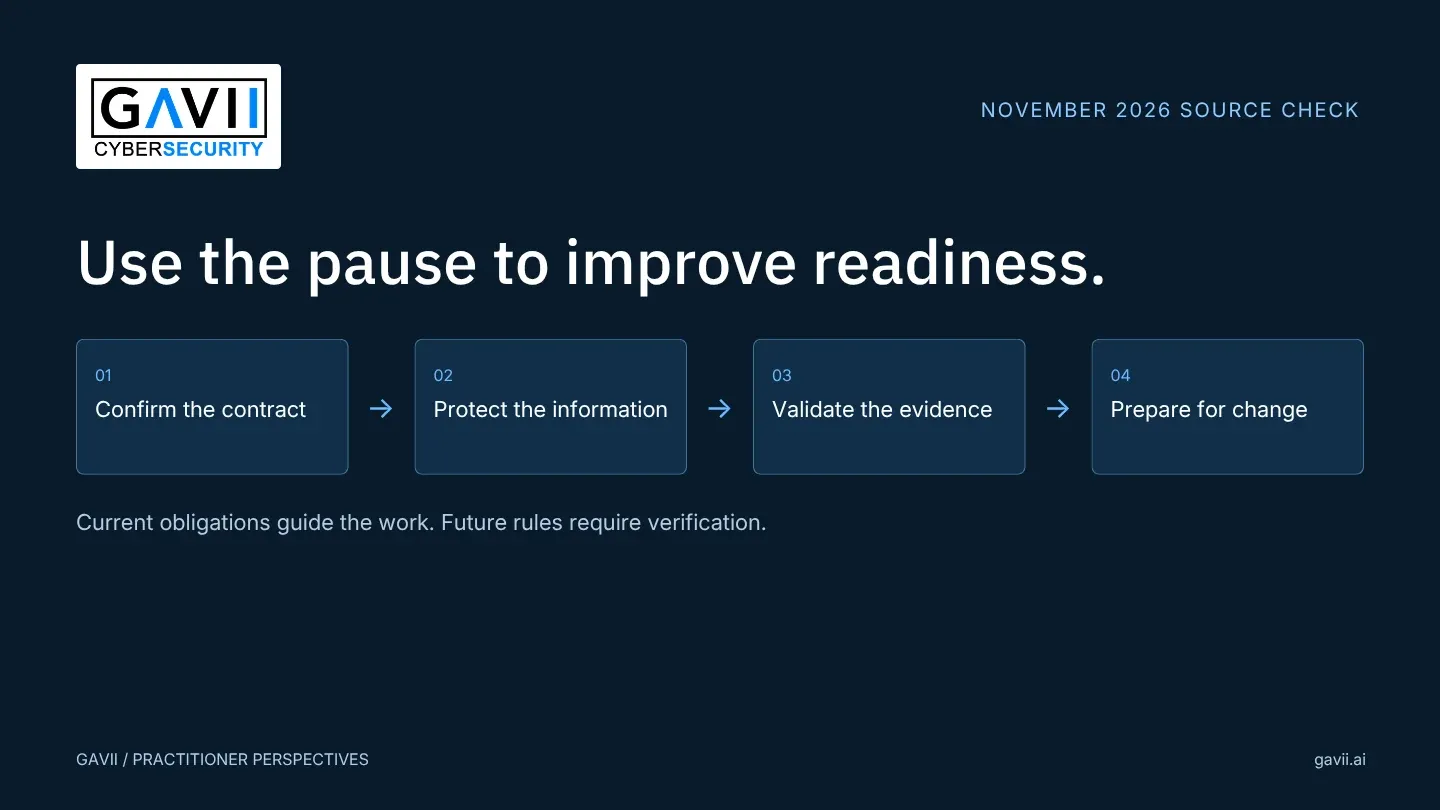
Read our Phase II update for a checklist. Do not infer a replacement transition date without new authoritative guidance.
Which documents should a contractor check?
- The current solicitation or contract: identify required clauses, assessment route, information types, and applicable milestones.
- Issued amendments or modifications: confirm what has actually changed in your procurement or agreement.
- Subcontract flow-downs: understand what the prime contractor requires and ask about inconsistent or outdated language.
- Current program guidance: compare the documents with authoritative instructions rather than vendor countdowns.
- Your system scope and records: determine whether your implementation and representations match the environment supporting the work.
What still requires attention?
Safeguarding duties and accurate self-assessments remain important. The relevant contract may include obligations for covered defense information, incident reporting, and assessment records. Review each obligation rather than assuming one paused milestone cancels the entire security program.
For implementation planning, see the small contractor readiness guide.
Sources and further reading
- CMMC official program page.
- Implementation memo on the Phase II suspension.
- 32 CFR Part 170 program rule.
- DFARS 252.204-7012.